
Zanchi has already confessed that the canon of Scripture is the normative authority which alone can be used to prove the “tenets of the faith” (§I.v). But now he’s going to circle back around because he wants make sure that we state the proper relationship between the authority of Scripture and the authority of the church in a very clear fashion.
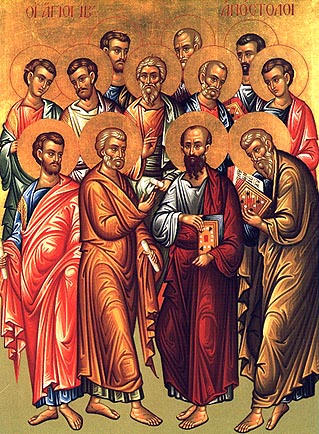
That relationship was one of the major presenting issues that sparked the Protestant Reformation in the 16th century. Which came first, the church or the Bible? Rome argued (and still does) that the church decided which books accorded with apostolic teaching and which did not. It conferred authority upon the Bible and, therefore, the Bible’s authority stands under the authority of the church, especially via unwritten apostolic traditions handed down to bishops. The pope, as earthly head of the church, exercises interpretive authority.
The Reformers said, as Zanchi puts it, that “the canonical books do not receive their authority from the church” (§I.vi). From generation to generation, as the church listened to the Holy Spirit and to the prophets and apostles who set down the Word of God, she has accepted, received, acknowledged, and declared which books are canonical and which not. But all of those actions testify to the church’s submissive posture before the Bible. Why? Because Scripture’s authority comes from the fact that it is God’s word.
[T]hese writings neither receive nor have their authority from [the church], but only from God, their proper author. Therefore, of themselves, because they are the word of God, they have authority [ius] over everyone and are worthy to be believed and obeyed by everyone simply.
Jerome Zanchi, Confession of the Christian Religion, §I.vi
Nevertheless, the church bears witness to the Scripture as the word of God. We testify that we hear in them God’s voice in the hope that, as we do, others will be moved by the authority of the church to “hear and read the holy Scriptures as the word of God” (§I.vii).
In offering this testimony to the living word of God, the church doesn’t “add something or take something away” from it (§I.viii). Nor does the church have the power to bring life to a stony heart. That’s the work of the Spirit who gives faith through the proclamation of the law and the gospel. But, like the Samaritan woman who invited her neighbors to “come, see a man who told me all that I ever did” (Jn. 4:29), the church uses whatever relational capital it can muster to turn people toward the source of living water (v. 10).

In a passage cited by Zanchi on this point, Augustine famously declared that he “would not have believe the gospel, had not the authority of the Church” moved him to it. Which gets us to the question that I hope we will all wrestle with: Do the local congregations of Christ’s church in which we participate have that sort of authority? Would someone coming in for the first time at the invitation of a coworker or family member be drawn to respond to the bold proclamation of the gospel on the basis of the church’s testimony? Or has the church become a stumbling block to belief. If the latter, what can we do as individuals and communities to change that?
Zanchi’s mentor Peter Martyr Vermgli (1499-1562) left behind a powerful collection of prayers drawn from the psalms. I’ve been convicted by how often he connects repentance and godliness within the church to her faithful and fruitful witness among the nations. Let’s pray for reformation within the house of God so that we can be credible witnesses to our Lord when we say to our neighbors, “Come and see.”
 O'Banions @ Home & Abroad