
God speaks in the writings of the prophets and apostles.
Although God has made himself and his eternal power and deity known—neither meagerly nor obscurely—to men of all the earth by means of those things which he has made, so that everyone who does not glorify God might be without excuse, nevertheless, we know that God has revealed His will clearly and fully in a special way, namely, by means of Spirit-inspired prophets and apostles, and by means of their writings. And, therefore, the prophetic and apostolic writings are the very word of God.[1]
Jerome Zanchi, Confession of Christian Religion, §I.ii
Zanchi continues confessing a doctrine of revelation by making a basic scholastic distinction between general and special revelation. By means of the former, God has “made himself… known” to all people in all places at all times. “How,” you ask, “has he done that?” Zanchi doesn’t elaborate on the matter here (I imagine because it would have been so obvious both to him and to his readers), but the brief answer is: in his work of creation (“those things he has made [facta sunt]”). The world around us (including ourselves—body and soul) testify to “his eternal power and deity.”
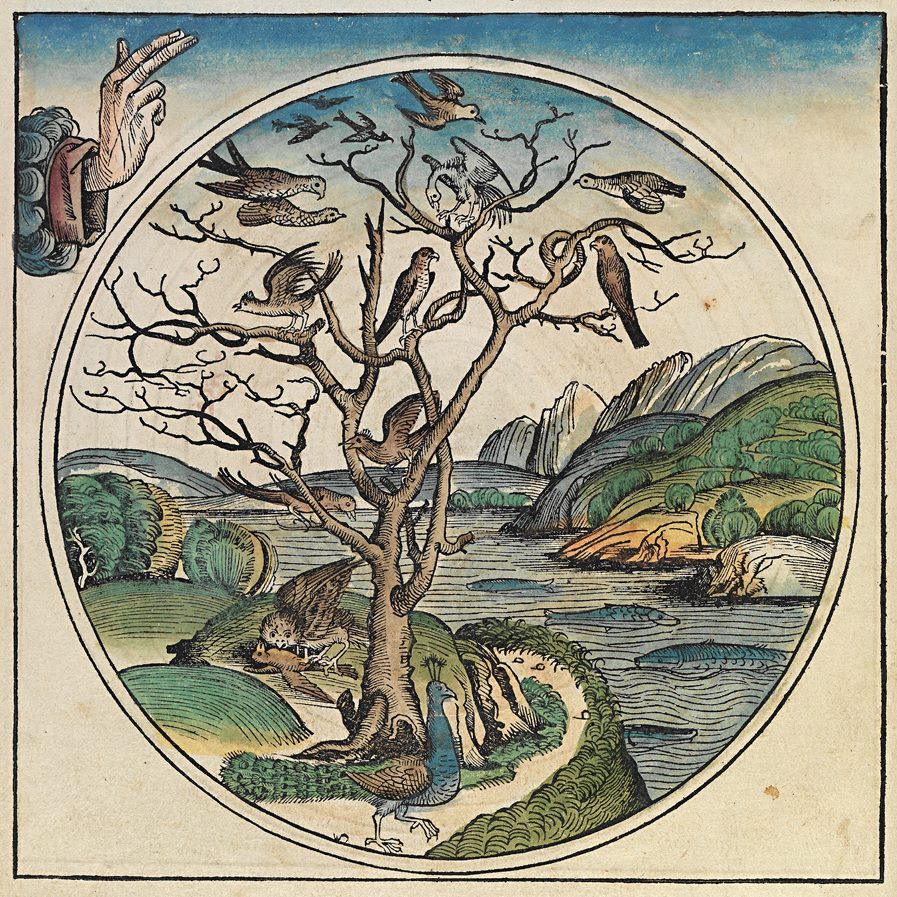
This isn’t a proof for God’s existence. At least, not in the way that we usually think about that sort of thing. Zanchi isn’t trying to use the witness of creation to convince his readers that God exists. His point is more that the witness is there, whether we accept it or not. God has made himself known to all people, so no one has an excuse. No one can say to him, “But I didn’t know that I was supposed to glorify you!”
Yet, notice that what we can know on the basis of that general revelation is limited: his eternal power and deity. Now that’s a lot. We could do a fair amount of a course on the doctrine of God based just on those few words (drawn from Rom. 1). But it turns out that there’s more that we must say (because there’s more that has been revealed).
God doesn’t only reveal himself to us through creation. He also speaks in a “special way” to and through human beings who are inspired by the Holy Spirit. God’s revelation of himself to these apostles and prophets was both more limited and also much fuller than general revelation.
It was more limited in the sense that this revelation wasn’t equally and always available to all people. It came at specific moments in history to specific individuals who lived in specific places. So, someone living in Denmark in the 10th century BC didn’t get to hear David singing a psalm newly composed as the Spirit carried David along (2 Pt. 1:21). As Ps. 133 envisions it, God’s blessing of eternal life comes specifically (of all places!) by way of Jerusalem.
Although Zanchi doesn’t “go there” in this passage, the great example of this narrow specificity is the fact that God’s Son became incarnate for us and for our salvation by taking upon himself a human nature, including a normal human body and a rational soul (with all of their limitations), and living a relatively short life in a relatively confined geographical area.
If this special revelation was more limited in its publication, it was nevertheless much richer than general revelation in the information disclosed. Later, Zanchi will give us entire chapters devoted to what constitutes the Law and the Gospel (which for him encompasses everything in Scripture), but he doesn’t wade into those waters here. Instead, his point is just that special revelation come to individual prophets and apostles and is then written down in such a way that those writings are “the very word of God.”
Sitting more than 400 years to Zanchi’s right on a timeline and having experienced the unsettling effects of the Enlightenment (not to mention textual criticism, theological liberalism, moral therapeutic deism, etc.), our response to §I.ii is almost certainly going to be something like: But how do you know that these are the very words of God?! What’s the demonstrable proof?
In the following paragraph (§I.iii), he does offer a sort of rationale (as we’ll see), but it doesn’t answer those questions in the way that we want it to. When we expect Zanchi to slam on the theological breaks, he surprises us by pumping the gas pedal. So, I wonder if we’re asking the wrong question or asking the right question in the wrong way. (Or maybe both.)

Zanchi’s bracing approach to Scripture here reminds me that we shouldn’t start from a posture of hubristic pseudo-sovereignty when we lift our eyes up to God. Before we come to Scripture, the world around us has already revealed that we’re creatures who exist in relation to and on account of an eternally powerful and divine Creator. So, as we turn our minds toward the Source of our existence, maybe the first thing out of our mouths shouldn’t be a huffy challenge: “Prove to me that you exist and that the Bible is the very word of God and then, once I’m fully convinced, I’ll recognize you as God.” Maybe we begin instead with humility.
[1] Margin: Rom. 1:19-20; Heb. 1:1; Heb. 2:3; 1 Pt. 1:21; Mat. 10:20.
 O'Banions @ Home & Abroad